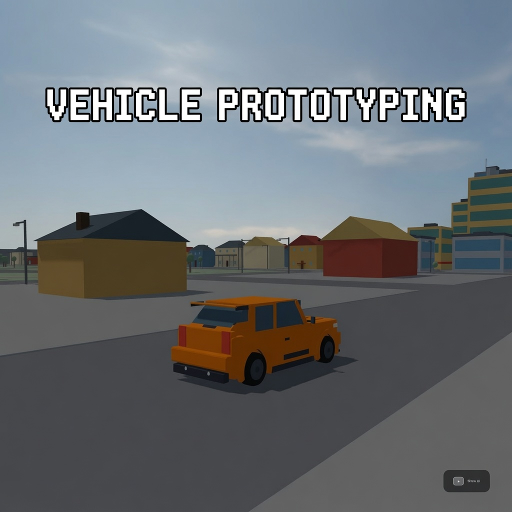
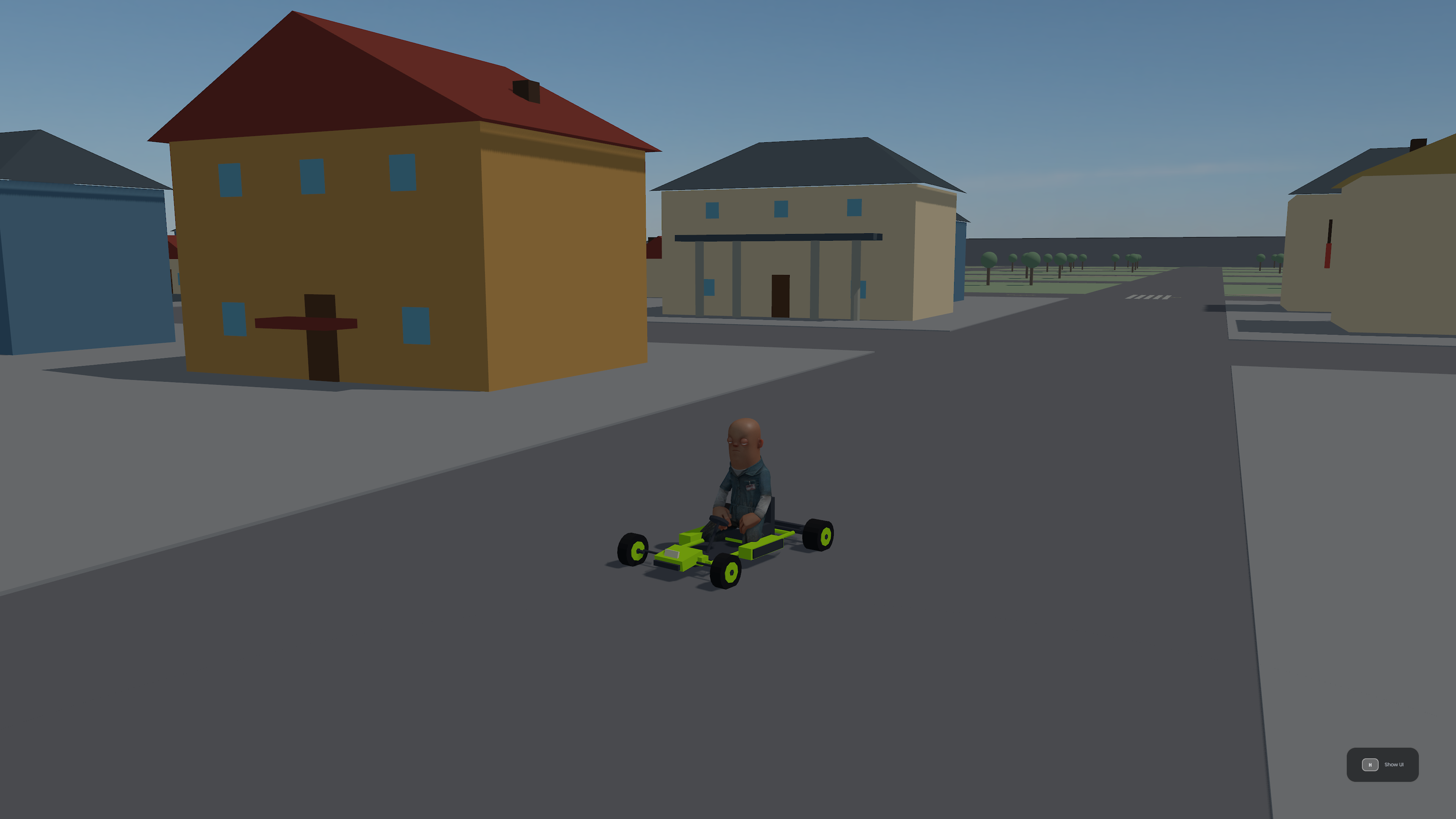
Vehicle Prototyping is live — a free, MIT-licensed baseline for building driving games in s&box, and the first of the s&box Field Kit family of prototyping tools.
Press Play and you're driving a tuned car through the Town in seconds. But the real point is what's under it: a complete, honest vehicle stack you can fork straight into your own game instead of starting from a blank scene.
What you get:
A tuned slip-curve physics stack — raycast suspension, a slip-ratio/slip-angle tire model with a friction ellipse and load sensitivity, 4× substepping, a drivetrain with auto-shift, and ABS / traction / stability assists at three levels (Casual / Sport / Sim), all in SI units.
Four cars, four feels — a front-drive hatch, a rear-drive coupe, a light kart, and a heavier pickup, each tuned to its class — picked from a live 3D showroom, with your drive mode following you between cars.
The Town — a drivable proving ground with instrumented stations woven into its streets: skidpad, drag strip, brake zone, slalom, ramps, banked curve, washboard, hill grades, and a J-turn pad.
Tuning that explains itself — 19 live dials with an in-game guide overlay telling you what each one actually does, save/load tune presets per car, and a full tuning-guide doc in the repo.
Proper controller support — variable throttle and brake on the analog triggers, not just on/off buttons, alongside full keyboard play.
A data-driven playtest harness — a Python runner drives the editor through a battery of maneuvers and prints pass/fail against per-class metric bands, so "feels right" becomes a number you can check.
A multi-part Blender vehicle pipeline — cars built from separate parts with joints at their pivots, so wheels compress and steer from the real simulation.
Plus telemetry, auto or sequential manual shifting, and a speedo that reads honestly in reverse.
It's a prototyping toolkit, so it's honest about its edges — and about its roadmap. Jump and ramp physics are getting a proper rework, and when that lands the Stunt Track (a dedicated jump park) opens up alongside the Town. The known maneuver-band edge cases are documented in the repo's feature matrix rather than hidden.
It's MIT licensed and meant to be forked. Clone it, open it in the editor, and build on a driving stack that already feels good. Feedback, forks, and bug reports are all welcome — tell me what you'd build with it.