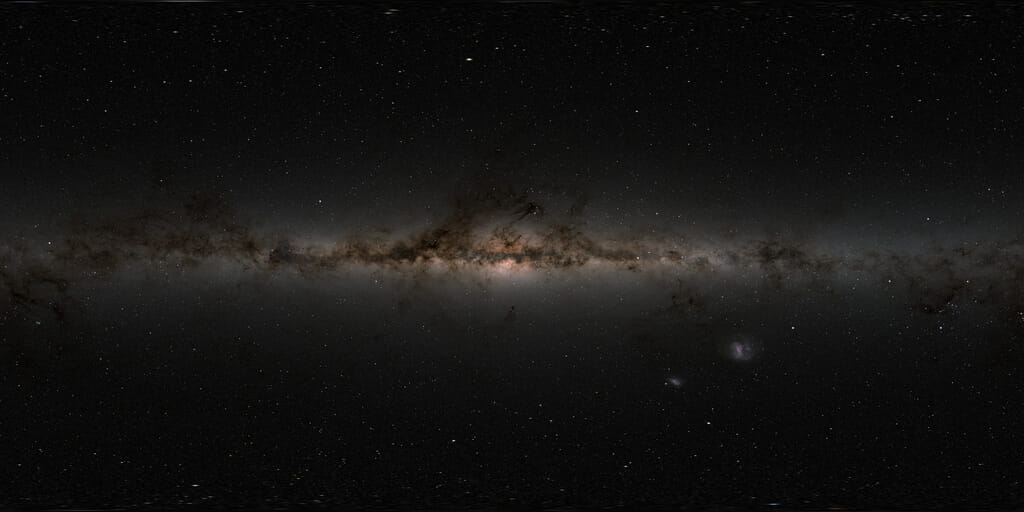
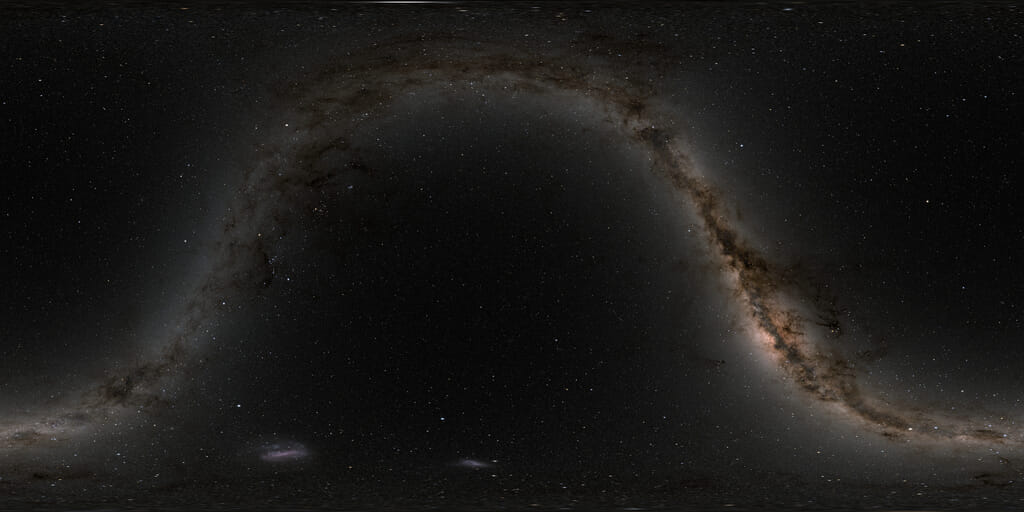
I appreciate the initial overwhelmingly positive response from those who gave Star Explorer a try. This project started when I went down a pretty crazy rabbit hole during development for my upcoming project. I wanted a realistic day/night cycle that had real stars, seasons, and lunar cycles. When I had the idea to see if I could make a skybox using the full 64K imagery from NASA, I had to figure out how to stream that at full resolution in EXR format while preserving HDR data and remaining stable. Then, I wanted to figure out if I could convert and display data on all the stars I possibly could. Then, I thought it would be neat to query observatory photos from the internet for each star... Then I started playing with gaussian splats. (Thank you to Carson Kompon from facepunch!) Now, it has become its own project that is a full digital observatory experience and I am thrilled that it has made its way into so many people's hands. I have other ridiculous ideas on how I can pack even more amounts of things into the experience, but I will discuss those below. While most feedback is positive, the two main points of criticism I have received are load times and the project leaving more desired. I'll explain how we got here and then we can talk about the criticisms.
While I initially tried single equirectangular images like the source material, this simply could not provide the fidelity I wanted or avoid awful distortion. Before settling on these "supercubemaps", I tried gore projection, but it pinched the hell out of images near the poles and filtering it properly became a nightmare.

First thing I needed to do was download all the imagery from NASA and convert the equirectangular images into cubemaps. Then, I needed to cut it into as few 8k textures as I could without sacrificing any image quality, since this is the maximum S&box shaders seem to accept without pitching a fit. For this, I used ImageMagik and a tool for it created by a smart fella named Fred. I wound up creating 5 layers of 54 8k textures arranged in cubes made of 3x3 faces. This was for: visible stars, deep space, constellations, constellation boundaries, and the celestial coordinate grid. In total that is 270 8k Images (108 HDR EXR and 162 greyscale).

The star catalog used is the HYG database 4.2. This way, visualizations of stars are selectable and you can seek further information by clicking on one.

The Galaxy visualization was created using point data from Gaia Sky converted to gaussian splats and Carlson Kompon's S&box library.

Below is a list of everything I used because gatekeeping is a nasty practice and we should all lift each other up to see what we can create together.

Deep Star Maps 2020 by NASA/Goddard Space Flight Center Scientific Visualization Studio:
NASA Scientific Visualization Studio
NASA Scientific Visualization Studio | Deep Star Maps 2020
The star map in celestial coordinates, at five different resolutions. The map is centered at 0h right ascension, and r.a. increases to the left. || starmap_2020_4k_print.jpg (1024x512) [41.8 KB] || starmap_2020_4k_searchweb.png (320x180) [53.9 KB] || starmap_2020_4k_thm.png (80x40) [5.5 KB] || starmap_2020_4k.exr (4096x2048) [34.3 MB] || starmap_20…

ImageMagik by ImageMagick Studio LLC:
ImageMagick
ImageMagick | Mastering Digital Image Alchemy

sphericalpano2cube by Fred/FMWCONCEPTS:
www.fmwconcepts.com
Fred's ImageMagick Scripts
HYG 4.2 Database by David Nash:
https://astronexus.com/projects/hyg

SIMBAD database operated at CDS, Strasbourg, France:
simbad.u-strasbg.fr
SIMBAD Astronomical Database - CDS (Strasbourg)
The SIMBAD astronomical database provides basic data, cross-identifications, bibliography and measurements for astronomical objects outside the solar system.

Gaussian Splats by Facepunch:
https://sbox.game/facepunch/gaussian_splats

Gaia Sky by The Gaia Sky Project:
gaiasky.space
Gaia Sky | Gaia Sky
I hear you on the load times. Unfortunately, I have no control over everybody's internet speed, but I have made great efforts to reduce the file size. Currently, it is just under a 5GB download just to look at the sky. I have compressed the hell out of them and reduced it over 10 times from its original size of over 50GB. Most of that is the two EXR layers for the visible stars and the deep space imagery. Like I stated above, this package contains 5 layers of 54 8k Images. This was as low as I could get the "supercubemaps" without compromising HDR data or dropping below the source resolution.

This is 270 textures that have to load into and out of your VRAM on-demand. Before I made a solution to stream them as best I could, my GPU would hit its 12GB VRAM limit and crash. Currently, VRAM usage appears to hover under 3GB and gets lower the less layers you have enabled. Any computer that meets S&box's minimum requirements should run it well. If you are having performance issues, I recommend disabling the other layers. The heaviest one is the deep space imagery, but sadly that is the coolest part in my opinion. The fact that I got a sky of 18,119,393,280 pixels (over 18 billion, not a typo) to download to and run on people's craptops with integrated graphics is a win in my book, but if I discover anything further I can do to reduce the download size or improve performance, I will do what I can. The sky is for everyone and I want it as accessible as possible.

The next major step for Star Explorer is going beyond the stars and bringing time into the equation.

Stars currently display information and imagery when selected, but I would like to eventually represent star systems, planets, moons, asteroids, comets, and spacecraft in 3D whenever reliable data is available. I have been researching NASA's SPICE system and other astronomical datasets that can be used to calculate the positions of planets, moons, spacecraft, and other solar system objects. I think SPICE would be the way to go here. I'd also like to eventually allow you to view the sky at any point in time, whether that is years in the past, right now, or far into the future. Maybe a timeline you can scrub through.

I would also like to add a proper search system. The HYG 4.2 database already powers the star catalog, but as the number of objects grows, finding a specific star, planet, moon, galaxy, nebula, or spacecraft should be as simple as typing its name.

The overall goal remains the same: to build the largest and most accessible interactive catalog of the night sky possible. If humanity has observed it, measured it, photographed it, or tracked it, I want Star Explorer to help you find it and learn about it.

Please continue to leave feedback on what you like and what you want to see more of. And thanks again everyone.

See you in the stars!

people
Log in to reply
You can't reply if you're not logged in. That would be crazy.