

Update 25.10.08 : news/update-25-10-08
 4
4 2
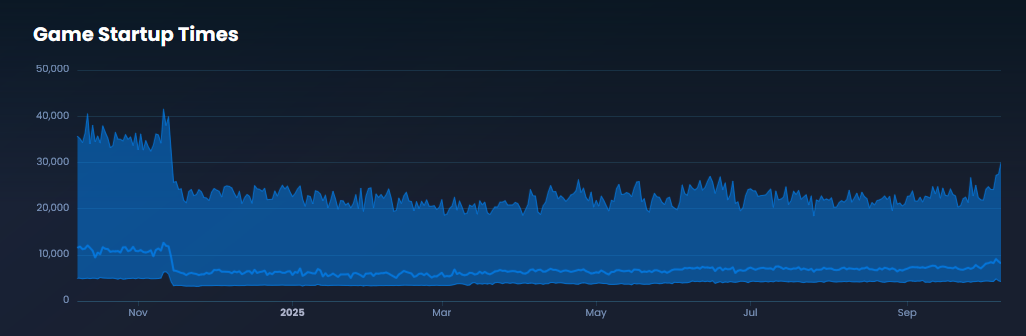
2Here's what we've been up to this week. Adding post process volumes, metrics, new editor features, quality of life and loads of bug and crash fixes.






ResourceState.VertexAndConstantBuffer and ResourceState.IndexBuffer instead you should use ResourceState.VertexOrIndexBuffer which infers the usage from the provided buffer.
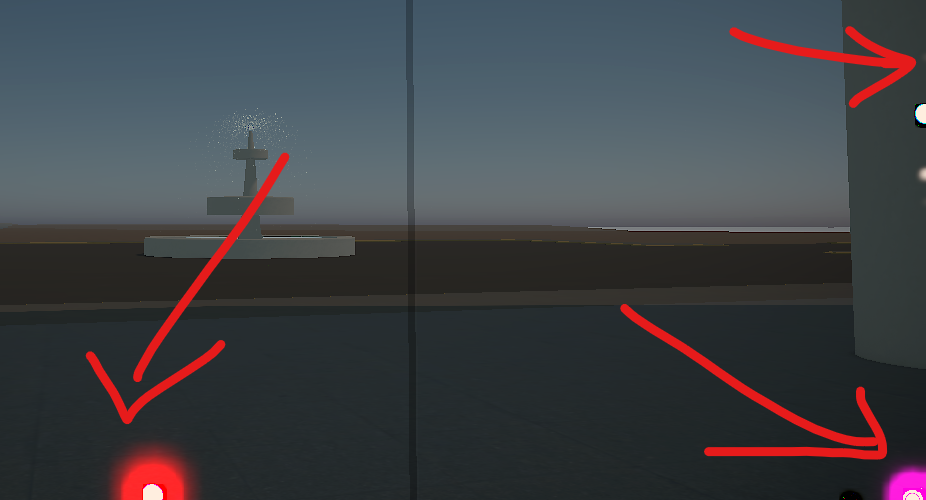
Time.Scale to 0) you were unable to move the mouse cursor with the Gamepad.
Display thirdparty licenses in about modals in game and editor
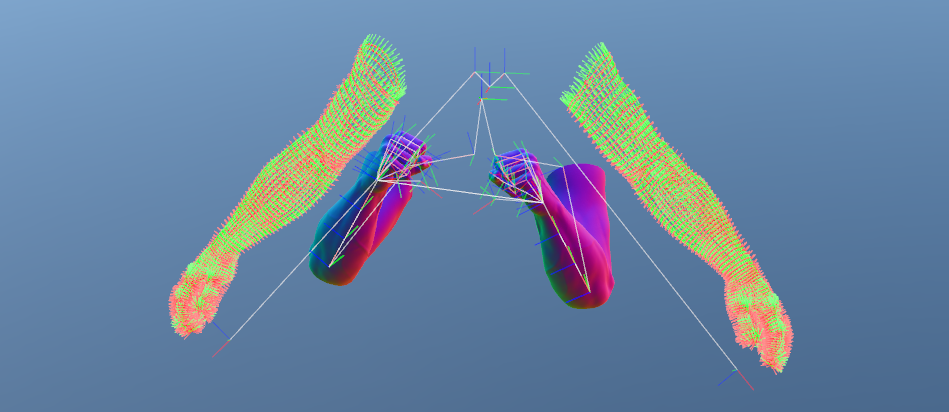
Support getting root motion transform on single sequences, not just animgraph
BBox control gizmo tweaks
Screen recorder stops when ending editor play session
Ambient Occlusion: Restored spatial denoise mode
Ambient Occlusion: Support non-standard projections and fix haloing around edges by calculating fov from projection matrix
Updated Box3D: Wind force & mesh vertex weld options
BaseItemWidget has more explicit callback handling and improved undo integration
Refactored SceneCamera.RenderToCubeTexture to use command lists
ModelPhysics bodies set a GameObject source so collision event system can look for listeners
Scene Viewport: Only show black background in 2d views with ShowSky disabled
Downsampled SSR producing artifacts and crashing Intel Graphics
SpriteRenderer having an unbound unused buffer leading to a potential crash
GPU Resource Barriers having completely wrong flags in many cases, leading to potential crashes or undefined behaviour
Rare crash in ModelDoc physics sim
Crash when loading invalid VPKs
Crash when binding invalid render targets
Speculative editor crash with destroying widgets
SnapToGrid dividing by zero
Updating PanelRealTime twice in editor, resulting in 2x faster UI transitions and animations
Standalone not booting because of missing quality profiles and expecting a download cache
Movie Maker: Not being able to drag time selection fade in
Movie Maker: Video exports have correct field of view and warm up ray tracing
Console styles
Scene Viewport: Fix FOV not respecting editor preferences
GameObjectSystems not running in PrefabScenes in editor, they will only not run in PrefabCacheScenes now
ModelPhysics Destroy
Profiler not launching from missing dependency Microsoft.Diagnostics.Tracing.TraceEvent
Editor TintAttribute and HelpUrlAttribute not working
Left-click inconsistency when select/deselect GameObject gizmos
Gamepad Cursor Issues
InputContext: CTRL + C queues a copy event, not cut
Hierarchy right-click context menu creation at root
First person models, moved to workshop
"Include Source Files" option temporarily while we figure out a more solid solution
BaseItemWidget.ItemsSelected and BaseItemWidget.ItemsDeselected are obsolete in favour of BaseItemWidget.SelectionChanged
ResourceState.VertexAndConstantBuffer and ResourceState.IndexBuffer are obsolete, use ResourceState.VertexOrIndexBuffer
Third party dependency: Template Numerical Toolkit (TNT)
Third party dependency: org.json
Unused parts of native recast
 garry
4
2
garry
4
2 Titanovsky
1
Titanovsky
1 G+
1
G+
1 Trundler
 MbK
MbK Braxen 🐟