GEIGER 0.0.5: The Building Breathes

Lamps sag and trip, leaks fall, rain falls outside, wind finds the windows, the street gains rooftops, and some rooms keep notes that answer each other.

Block 9 is meant to feel like a place that carries on without you. 0.0.5 gives it more small ways to do that: the wiring misbehaves, water falls where the stain is, the wind finds an open pane, the floor outside has a few more rooftops, and now and then it rains. Nothing here attacks you. Most of it you will hear before you notice it, and the lighting, the sound and the weather are meant to work together rather than sit side by side.

The wiring

Ceiling lamps now share their wiring. A stretch of them can sag together for a moment, with a faint buzz if you are standing close. Now and then a whole stretch goes out together somewhere away from you, with the clank of a breaker, and strikes back on a few seconds later. Some lamps stutter and catch the first time you come near them.

How often it happens depends on the floor. Derelict, laboratory and maintenance floors misbehave most, sealed and quarantined floors almost never, and a floor with a dead section of wiring is worse again.

Water, wind and dust

A drip now falls as a thin pale streak from the stain above it and lands in the puddle with its sound, sending a faint ripple across the water that thins as it spreads. The wind finds panes on floors with windows, most on collapsed and derelict floors and more on freezing ones, and standing by a window can let in a little more of it. Slamming doors shake a little dust loose when you are close.

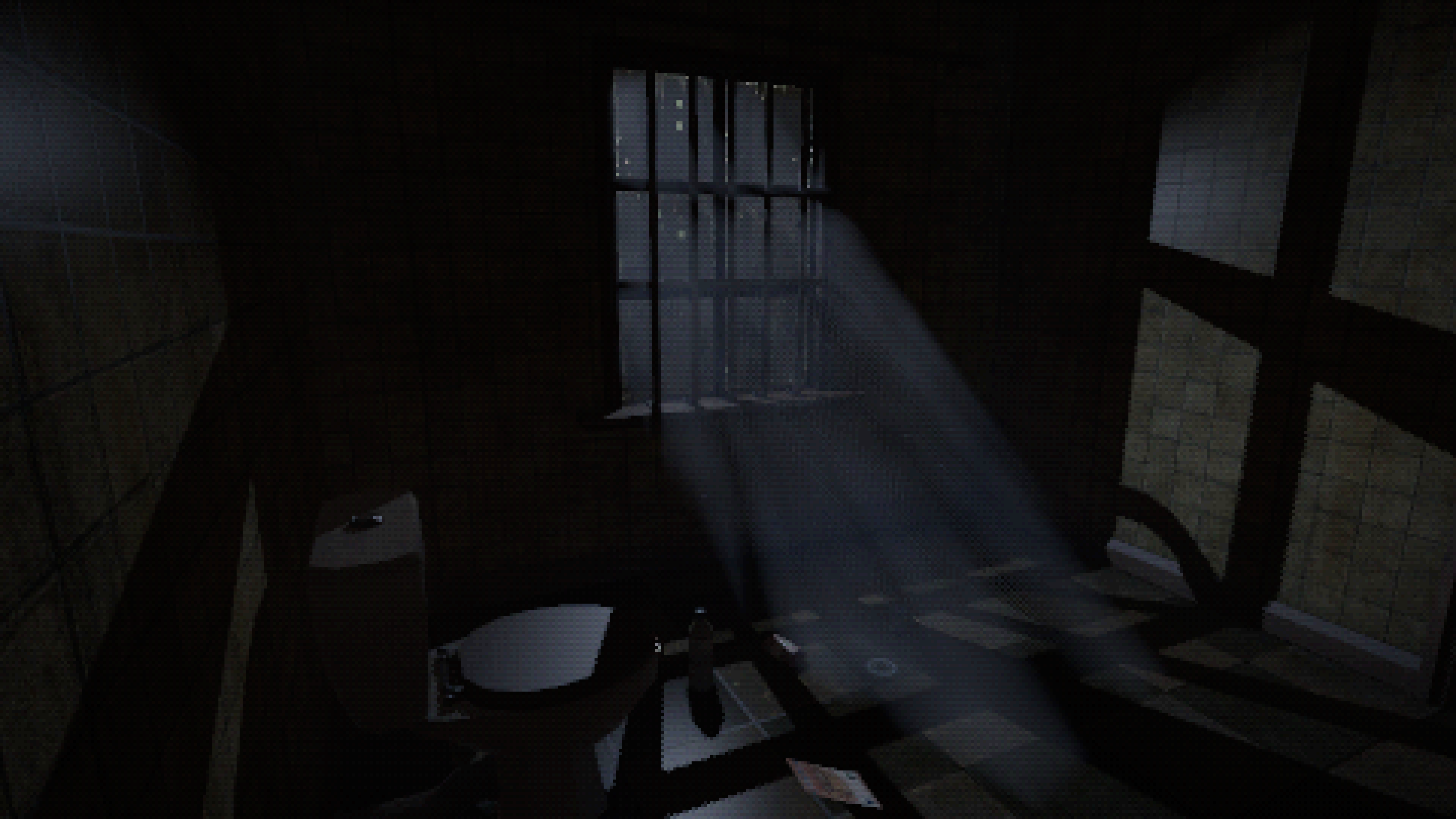
The moonlight through windows now thins and thickens slowly as cloud passes, each window on its own cycle. Walking into a moonbeam no longer shows its edges: the beam fades out completely around you and takes the window's shape. The lobby windows keep solid glass, since the lobby has no skyline.

Rain

The night outside Block 9 is now either clear or wet. Which one you get is decided once for each shift, so it stays the same as you climb, and clear is the more common of the two. A daily shift gets the same sky for everyone.

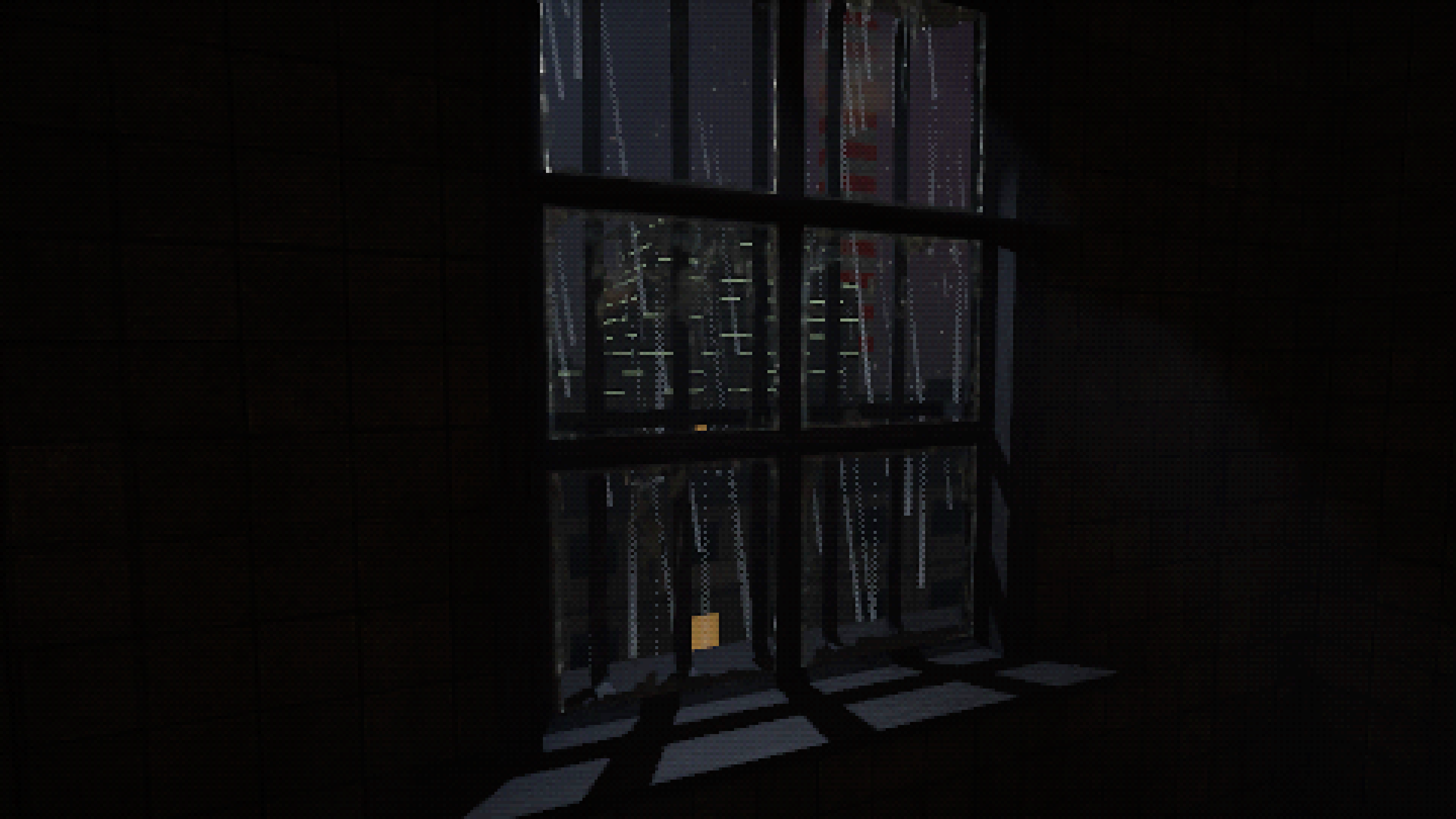
I wanted the rain to change how an empty room feels, not to be a special effect. It falls outside, beyond the glass, and you see it against the street blocks and the lights of the works: faint streaks across the dirty pane, longer ones in the dark behind it, leaning a little when a gust comes through. Nothing falls inside the building. The moonlight is softer under the cloud and the haze closes in, so the distant city is greyer and further off, but the skyline is still there.

The sound was the part I cared about most. Beside intact glass the rain is soft and muffled, a gentle patter on the other side of the pane. At a broken window it is clearer and louder, and the wind comes in with it. Further inside, only a distant wash remains, and floors with no windows at all hear none of it. Walk from one to the other and it fades across rather than switching. I have listened to the rain on its own and it sounds soothing, which was the direction I was aiming for, so I have left it as it is.

The wind has changed too. It used to be one recording on repeat. It now draws on several soft draughts and a couple of stronger gusts, never plays the same one twice in a row, and varies the pitch, volume and gap each time. I have not sat down and listened to every one of them yet.

Floors that sound like themselves

Building noises already varied by floor. They are now spaced so that no two stack and repeats are held back. Sealed and blackout floors, and stale ones, are allowed to go quiet for longer.

The haze takes a faint tint from the floor too: greener in medical and laboratory areas, dusty brown in derelict and archive areas, cooler in maintenance and spillage areas. Lamps burn paler in medical areas and a deeper amber on derelict and collapsed floors.

Outside, and what was left behind

The street gains water tanks, aerials with warning lights and a few smoking chimneys on the rooftops across from your windows.

Some floors now carry a pair of handwritten notes in two different rooms, one answering the other. They suit the floor they are on, and they never say where anything is.

On a new shift some rooms also keep what their people left in a hurry: a bag and keys by the door, a box half packed, a meal left on the table, a first aid kit set out, tools put down mid job. Storerooms and worn floors gather more cobwebs in their corners, and the taller blocks across the street step in towards the top.

The works at the far edge of the city now have a second chimney, a tank yard and a glow on the ground, with wider banded chimneys and a larger plume, and the blocks in front of it are kept low so it can be seen from a window that faces it. Ceiling stains from leaks spread into smaller marks, and worn corners darken, while clean medical and office floors stay mostly unmarked.

The Building Breathes

0.0.5
19 October 2026
24 changes in this update

Added

13 changes
  • Voltage dips: Ceiling lamps on a shared stretch of wiring now sag together for a moment, with a faint buzz if you are close; derelict, laboratory and maintenance floors do it most, and sealed and quarantined floors almost never

  • Tripped circuits: A whole stretch of lamps can go out together far from you, with the clank of a breaker, and strike back on a few seconds later

  • Lamp warm-up: Some lamps stutter and catch with a buzz the first time you come near them

  • Building noises: Maintenance, bunker and laboratory floors carry the sound of distant machinery starting and stopping, derelict and collapsed floors creak and shed grit, and other floors occasionally rattle a loose panel; each happens rarely, never overlaps another event and comes with a caption

  • Wind at windows: Floors with windows, especially collapsed, derelict and freezing ones, carry gusts of wind at a pane, and standing next to a window can let in a little more; the wind draws on seven different recordings, soft draughts and stronger gusts, never the same one twice running, and a gust bends the rain

  • Leaks: A drip falls as a thin pale streak from the stain above it and lands in the puddle with its sound, and a faint ripple spreads across the water, thinning as it goes

  • Weather: The night outside Block 9 is either clear or raining, chosen once for each shift so it stays the same as you climb; rain falls beyond the windows and shows through intact glass as streaks and trails, the moonlight softens under the cloud and the haze closes in a little

  • Rain sounds: Rain is soft and muffled through intact glass, clearer and louder at a broken window, and a distant wash in the rest of the building; floors without windows hear none, and the weather fades in and out rather than switching

  • Moonlight: Moonbeams and their light thin and thicken slowly as cloud passes, each window on its own cycle

  • Left notes: Some floors carry a pair of handwritten notes in two different rooms, one answering the other, written to suit the floor (flooded, medical, laboratory, maintenance, shelter and others)

  • Skyline: Rooftops across the street gain water tanks, aerials with warning lights and chimneys, a few chimneys smoke, and some of the taller blocks step in towards the top

  • Left behind: On a new shift, some residential rooms hold a small arrangement left in a hurry, such as a bag and keys by the door, a half packed box, a meal left on the table, a desk with personal things, a first aid kit set out, or tools put down mid job; storerooms and shelters keep tools, tins and torches

  • Cobwebs: Storerooms, plant rooms and workshops, and worn floors, gather more webs in their corners, while medical floors, laboratories, offices and bunkers are kept cleaner

Improved

7 changes
  • Ageing: Ceiling stains from leaks gain smaller satellite stains, corners of worn floors and utility rooms darken, and maintenance, bunker and derelict plant rooms collect damp patches on the floor; clean medical, laboratory and office floors stay mostly unmarked

  • Industrial plant: The distant works gain a second chimney, a tank yard, a pipe run and a glow on the ground, the chimneys are wider at the base and give off a larger plume, and the blocks between the plant and your window are kept low enough to see it over

  • Window glass: Intact window panes are translucent grime rather than solid slate, so the street blocks, lit windows and warning lights show through the dirt, while streaks and stains still dull the view

  • Fog: The haze is visible and takes its colour from the floor, pale green in medical and laboratory areas, dusty brown in derelict and archive areas, cold blue in maintenance, bunker and spillage areas, sallow in offices, and almost black on a blackout; freezing floors are bluer

  • Lamp colour: Medical and laboratory lamps burn a little paler, and derelict and collapsed floors a deeper amber

  • Floor traits: A dead stretch of wiring makes circuits fail more often and quietens the machinery, freezing floors draught more, and stale and sealed floors go quiet for longer

  • Sound: Building noises are spaced out so no two stack, a rare event replaces the usual noise rather than joining it, and repeats are held back

Fixed

3 changes
  • Moonlight: Walking into a moonbeam no longer shows its edges or a white wash; the beam fades out completely while you stand inside it, and its cross-section and floor patch now take the shape of the window instead of an oval

  • Lobby windows: The lobby has no skyline, so its window glass is solid again while the wooden frame keeps its own texture

  • Rain: Falling rain is only seen through windows and over the street; it no longer streaks across interior walls and furniture

Removed

1 change
  • Wind: The single looping wind recording is gone, replaced by the new soft wind and gust recordings

people
Log in to reply
You can't reply if you're not logged in. That would be crazy.