Playermodels, and a package that isn't 460MB
v379386
10 September 2026
21 changes in this update
Make a playermodel out of anything you have modelled - a character you can walk around in, driven by the animations s&box already ships.
File > Make Player compiles it and writes a test scene with a floor and a player wearing it. Press Play and walk around.
Your model keeps its own shape. The built-in character's skeleton is fitted inside your model, so the animations only bend joints - a stocky robot stays stocky.
Help > Start Playermodel Tutorial walks it through in plain English, with an example robot to practise on, or start it on a model of your own.
The console names any bone whose spelling the animations did not recognise - almost always a typo, and the only place you would be told.
Transform handles in the viewport: drag arrows, rotate rings and a scale handle instead of typing three numbers. W, E and R switch between them.
Remesh reduces a dense import to a triangle budget, so a scan or a Meshy generation can finally be sculpted, rigged and compiled.
Subdivide is on the Rig bar now, where a too-coarse joint is actually found.
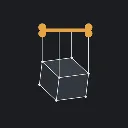
Marionette animates whole parts, not just bones - a door, a lever, a magazine, on the same timeline as the hand that works it.
A clip can hold several objects, each with its own skeleton: pose the hand, the weapon in it, and that weapon's bolt in one clip.
Marionette imports OBJ files split into their parts, with no .vmdl to compile first.
Dense imports are workable. Hovering, picking, dragging and sculpting a million-face mesh are each under a millisecond now.
Hovering an imported part no longer freezes it - 237ms down to under a tenth of a millisecond.
A sculpt dab on a million-face body went from 148ms to 0.3ms.
Parts load and rebuild four to ten times faster, with far less memory churn.
The package was shipping 434MB of modelling scratch that had no business in it. This revision is 10MB - updating reclaims the rest.
Rigging an imported mesh made every compile fail, if the mesh carried vertex colour.
A model compiled from an OBJ could arrive lying on its side.
A rigged model's collision stayed where the model used to be. It follows the bones now.
Deleting parts of an imported mesh is no longer slower the more you have deleted.
Deleting a group of selected parts removed only the one you right-clicked.