This update introduces new tutorials, random drops, a platform chat system, a new welcome screen, rendering and audio API additions, performance improvements, and a wide range of editor and rendering fixes.
As referenced in last week's analysis of the Steam Reviews, there are a lot of misunderstandings of what s&box is and what it isn't. We haven't done a good job of explaining ourselves on the game side. It feels like we have done a good job of explaining ourselves to developers, but have trood in a bunch of dog shit when explaining it to gamers.
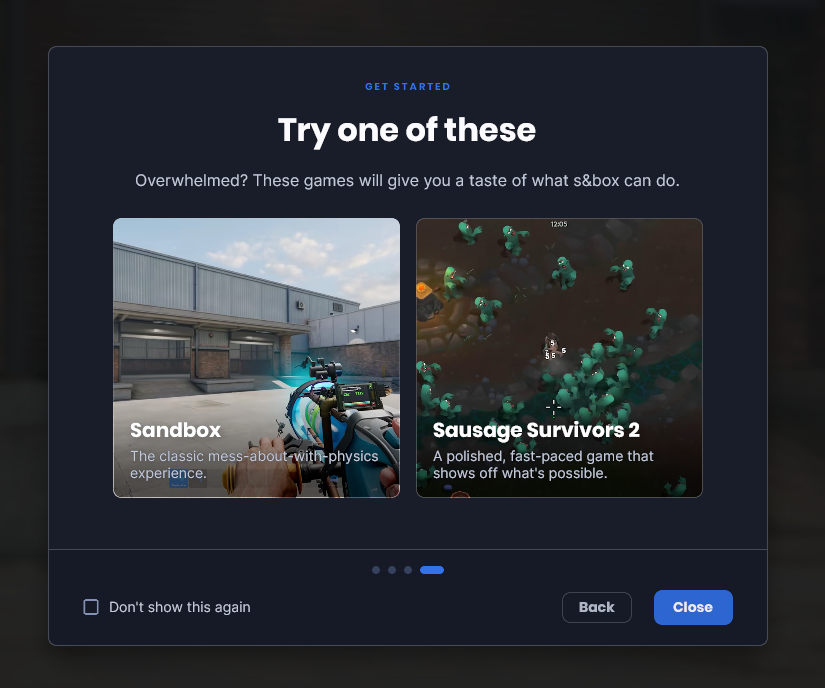
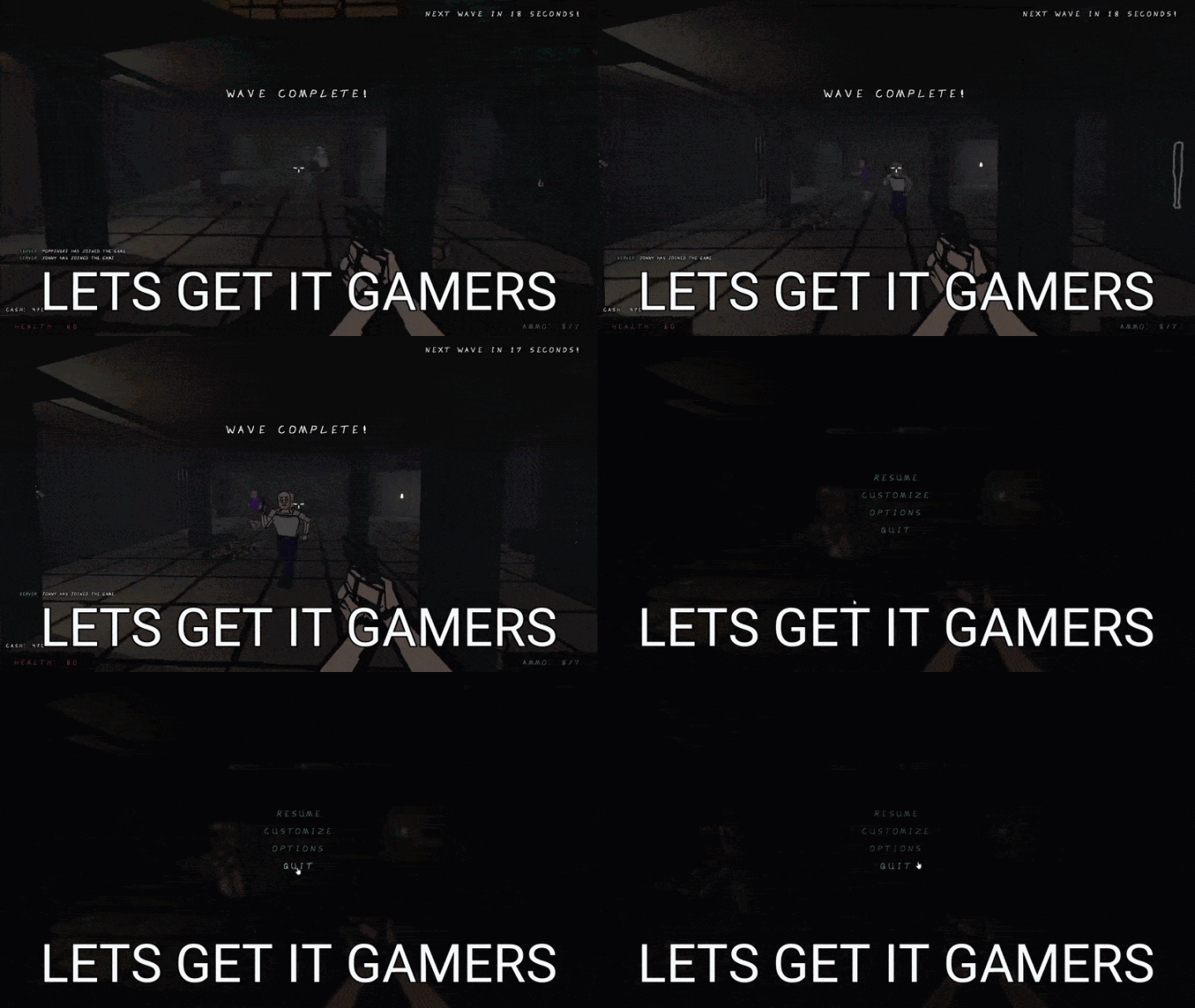
This week I've added a welcome screen to the game to explain some of the unobvious. This screen will pop up on first run, explain a few things, and make a suggestion to play Sandbox Mode or Sausage Survivors 2. The hope being that people who are coming here for the first time will read it and their first experience will be a good one.
Obviously, no-one reads anything any more. No-one is even reading this. They're probably being told what it says in a youtube video, or a tiktok video with fart noises and someone playing tetris at the side to make sure they don't get bored. But you know, at least we can say we tried.
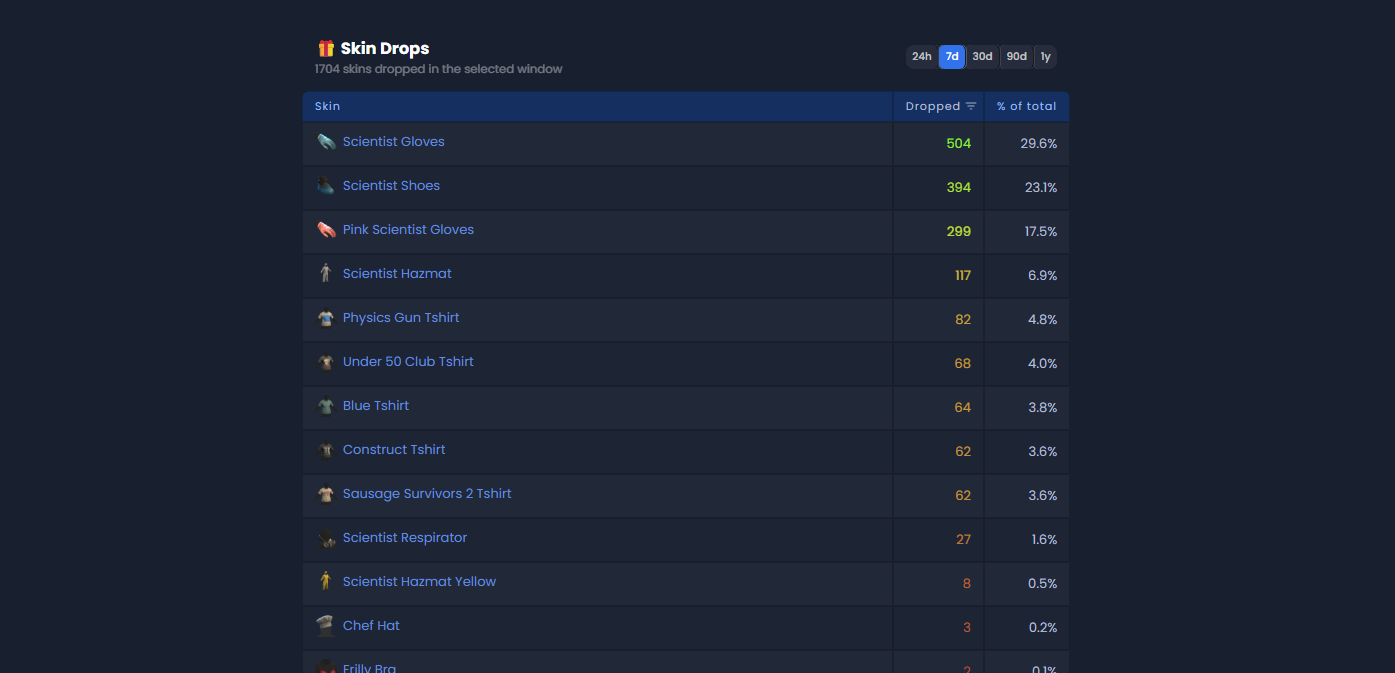
We now have a random drop system. There are certain criteria to meet to be eligible for a drop, and once you reach that threshold you'll receive a random item. These items can be traded and sold, like any other item. You can get one of these drops every week.
We want to do more with this system in the future to encourage positive community interactions, rather than purely play time. For this reason we've made our own programmable backend for it, rather than using the existing Steamworks system.
Right now your chances of drops are based on factors like games played, new games played, time played, reviews and game ratings. We'll tweak this in the future so that people who are positive community members will be more eligible for rarer rewards. We'll be keeping an eye on it too, to make sure it's not being botted and gamed.
You can see which skins have been dropped at the bottom of the Skin Metrics page.
This site now has developer tutorials. This started as a way for us to write smaller tutorials without filling the documentation without too much noise, but it's obviously way more useful if the community can edit them too. This is accessible at https://sbox.game/learn - and is something we'll be contributing to and will be improving over time. Let us know what you think!
Trade Protection is active for the Steam Inventory items in s&box. You can read more about it at that link.
Basically there's no reason not to have it, and it's better to have it enabled sooner rather than later, so if we do stuff in game with the items we can show that they're trade protected instead of doing it retroactively.
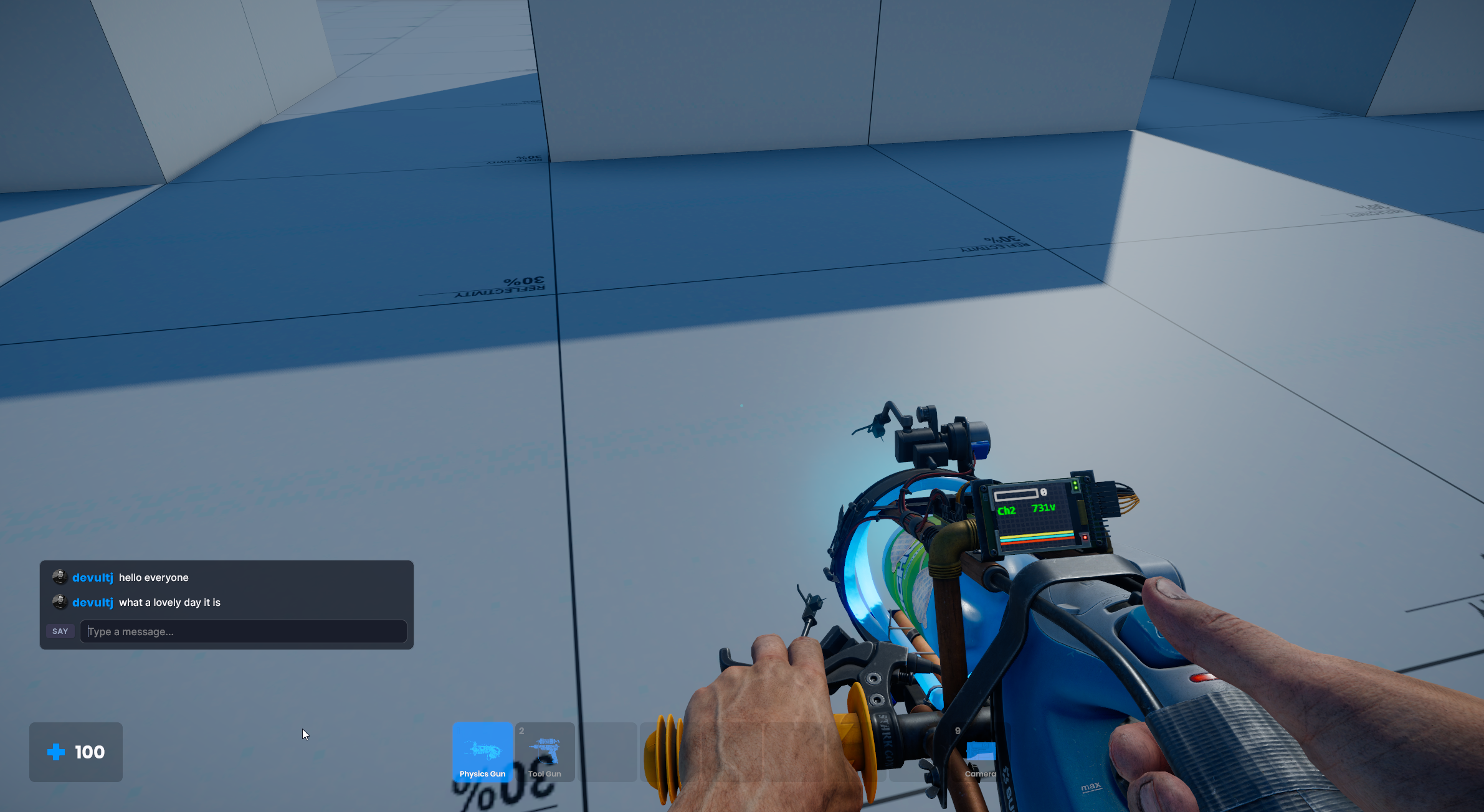
Everyone had to implement their own chat into their games, that was stupid. Now there's a default chat, this makes a consistent platform experience, players can turn chat off, mute other users and filter naughty words.
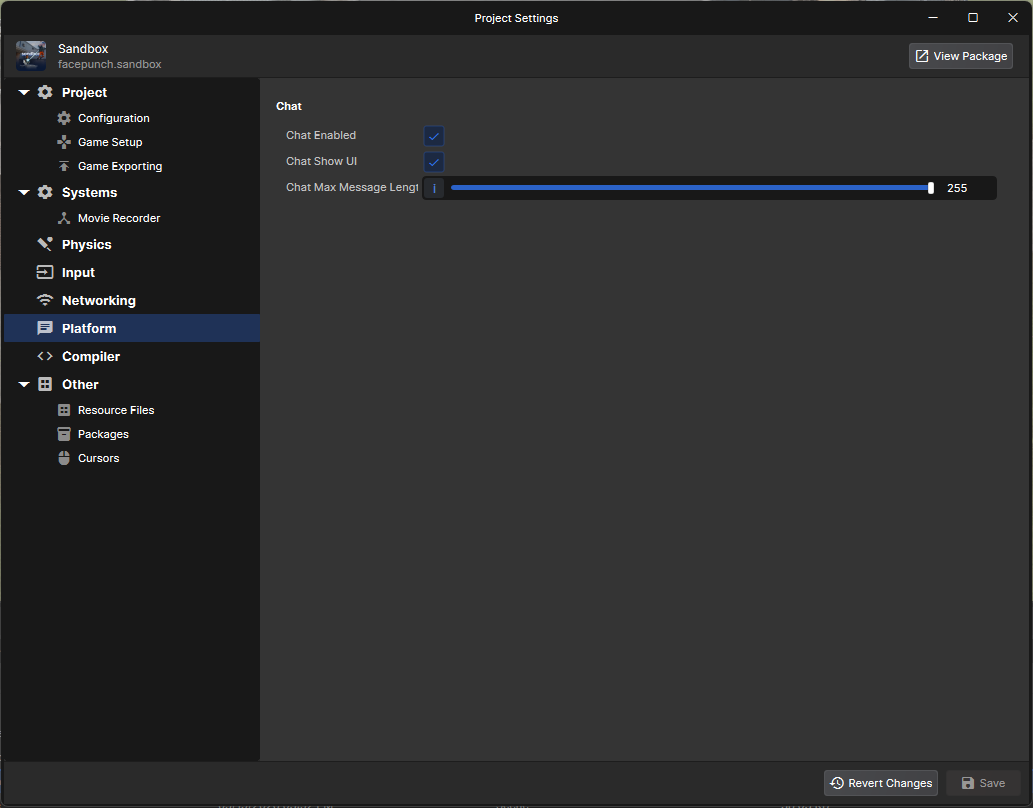
For new projects this is turned on by default, for older projects this is opt-in. It can be toggled on and off in the project settings.You can use `Chat.AddText( ... )` to add system text for notifications, or whatever you'd like.
This has blocking behaviour built-in, and you can disable the chat in your settings menu. You can listen to chat messages using `IChatEvent.OnChatMessage`, so if you want to filter for stuff like team chat, add commands to your game, you can do that. We have potential plans for first-party commands / chat channels in the future.
To turn it off, visit your project settings.We'll probably add a few more things like chat channels, emojis, and things. But customization won't be too crazy.
We have a "Voice" volume slider in our settings, but we were relying on game developers to implement this functionality themselves. This was shit, and as a result it didn't work for most games...Now all voice transmission MUST go through the Voice Mixer, or some Mixer that is a child of the Voice Mixer. That way games can no longer circumvent the "Voice" volume slider, and both players and streamers alike can rejoice in the fact that they won't have to hear another soul once muted.
I added a grid on the brush that highlights the underlying terrain resolution. If you find that you need more granularity than the grid, you should consider increasing your terrain resolution.
Fixed-function MSAA resolve doesnt allow doing weighting by alpha, if you wanted to take a high resolution screenshot with a transparent background, but with still RGB color, the edges of the background would blend linearly with the thing, causing it to bleed on edges of geometry.
If you have a translucent background, whether on panels or screenshots, it'll use a weighted MSAA resolve that blends perfectly in all cases, and easy to maintain if we move away from MSAA.
We shouldn't consider special cases where this should or not be used, should just work.
With the new C# Shadows we ended up with a minor regression that shadows would not fade smoothly if your object is transparent by tint.
Furthermore opaque fade would not work if you have MSAA disabled on the editor.
Both cases are now solved.
I'm not a fan of this opaque fade stuff and how we deal with Alphatest for hairs, at some point I really want to do proper Order Independent Translucency so we dont have to depend on MSAA for things to look smooth, but iterating slowly.
Before we optimize anything, we need to know which areas to focus on, which areas are holding players back. Is it the GPU? Is it the CPU? Is it physics, is it animation? The answer changes dramatically depending on the hardware people are running.
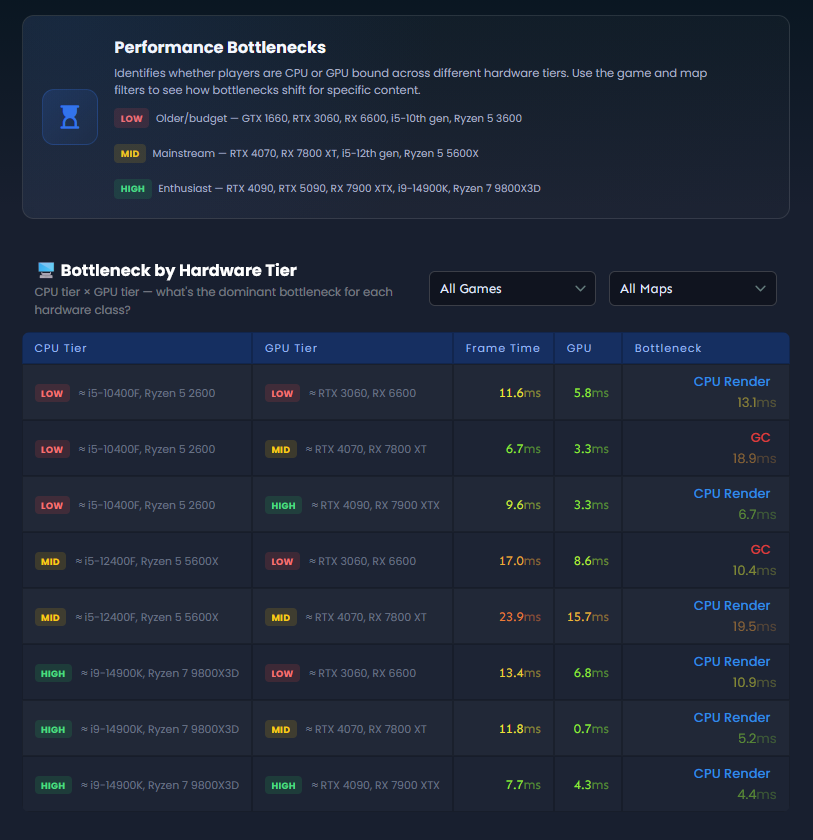
This update we started collecting GPU frametime in our performance analytics. Combined with our existing CPU profiling we can now classify every player session as either GPU-bound or CPU-bound, and iif CPU-bound pinpoint which stage (render, physics, animation, particles, etc.) is the culprit.
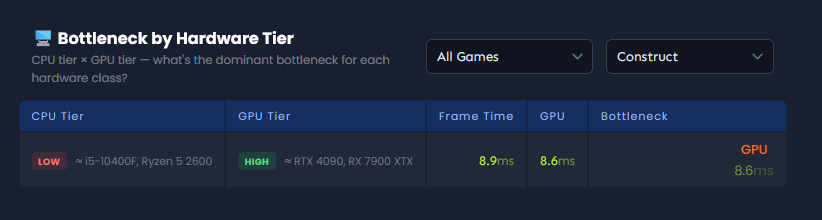
I've then added a new page to our metrics, performance bottlenecks - this groups players into hardware tiers and shows the dominant bottleneck for each CPU x GPU combination. This gives us a clear picture that we are almost always CPU bound submitting rendering work to the GPU, the GPU never struggles to actually run this work.
You can also filter by game and map to see how specific content shifts this balance - a physics-heavy game might bottleneck the CPU, where as a very art heavy map might bottleneck on the GPU.The sample sizes are low right now, as the update rolls out we should have a very clear picture going forward.
We broke a few things while moving to our UI batched renderer. One thing that was lost is the ability to use custom rendering on panels. This is useful for more advanced UIs like minimaps, custom geometry or shaders.
You can start recording your own render commands like so:
public class GlowPanel : Panel, IPanelDraw
{
static Material GlowMat = Material.FromShader( "shaders/ui_glow.shader" );
public void Draw( CommandList cl )
{
cl.Attributes.Set( "GlowColor", Color.Cyan );
cl.DrawQuad( Box.Rect, GlowMat, Color.White );
}
}
A smaller update this week because of hackweek but we still got a lot of important stuff done in just a few days.
We've been tweaking discovery still on the backend, pushing the good stuff forward and dragging the slop to the bottom. The welcome screen should help new players get a more positive experience too.
Tutorials are a vital part of the ecosystem, we've already been seeing many new developers trying out s&box, learning the toolset and creating new experiences for everyone to play.
The performance data is leading the way with optimizations, now we know where the biggest bottlenecks are for all users across all hardware, we know where to focus our efforts.
We're getting what needs to be done, done. No slowing down - see you next week. 💪
26.05.20
26.05.20
20 May 2026
🎁 Added
Default platform chat system - games can toggle this on/off in project settings, and hook into it with IChatEvent
Welcome screen shown on first game startup to communicate what s&box is
`SoundFile.FromOgg` for loading OggVorbis sound files
`GpuBuffer<T>.CopyTo` for GPU-side buffer-to-buffer copies
`RenderAttributes.Set(uint)` overload for correctly passing unsigned integer attributes to shaders
`CameraComponent.RenderToBitmap` overload with optional UI rendering parameter
Clutter LOD support for instanced models — models in the same LOD level are batched into a single draw call
Voice Mixer added to default mixers; Voice Component now restricted to only use Voice Mixer or sub-mixers, ensuring the voice volume setting always works
Terrain storage grid visualization when painting materials
UI panels can perform custom drawing again via `IPanelDraw` and `Draw(CommandList)`
Backend notice system for item drops
🧼 Improved
Trace results no longer allocate arrays, reducing GC pressure — use `HasTag()` instead of the now-obsolete `.Tags` property
Redesigned package modal to match the rest of the UI
Doo methods renamed to include "Doo" in their names for clarity and to avoid variable name conflicts (old names remain as `[Obsolete]` extension methods)
`GpuBuffer.SetData()` now accepts `ReadOnlySpan<T>` instead of requiring `Span<T>`
SceneTree search no longer filters out prefab contents
Video settings are now applied on first launch, fixing potential poor performance before settings are saved
Heightfield collision no longer snags player movement
`TerrainStorage.Resolution` setter made private — use `SetResolution()` instead
`GameObjectSystem` properties now respect property initializers and `[DefaultValue]` attributes
Stale config values are now removed on failed deserialization
`LoadAllGameResource` can now replace existing resources when loading addons or syncing network files
Disabled opaque fade being wrongly enabled on on GameOverlays
🪛 Fixed
Backwards seek (e.g. from `SoundHandle.Time`) causing an infinite loop when hitting the very start of a sound
Opaque Fade not working without MSAA and not rendering properly in shadows
MSAA edges appearing in translucent `screenshot_highres` captures and scene panels
`CameraComponent.RenderToBitmap` UI scaling incorrectly to the bitmap size
Pivot tool grid snapping when dragging fast
Editor shortcuts getting stuck after ALT+TAB or pressing the WIN key while navigating the viewport
Square particles on some impact effects due to incorrect texture paths
Vertex painting not working with custom blendable shaders
System scene overwriting game object systems of the actual scene
Clothing hide parameter selecting wrong bodygroup for human models
Scene system render stats breaking with multiple render scopes
TreeView item not committing pending name change when unfocused
Screenshot UI resolution not matching when resizing - Thanks @Matt9440
Regarding Welcome Screen, it’s great that you added it. I think it would have been even better on April 28. And finally, you’ve started using clearer language to explain that this is a UGC platform, not the "spiritual successor to Garry’s Mod"
Don't forget to update the description on the Steam page as well.
Trace results no longer allocate arrays, reducing GC pressure — use `HasTag()` instead of the now-obsolete `.Tags` property
What does "no longer allocate arrays" means? How does it help with GC? What does it have to do with having a function returning what you're looking for instead of a property? :)))
Thank you for learn tab! As person who isn't expert at programing I found it very frustrating and repulsive when I wanted to learn engine but could hardly find any proper learnning material expect documentation which only write what exist in engine but don't explain how to make things.
Don't forget to update the description on the Steam page as well.
In improved it's said:
What does "no longer allocate arrays" means?
How does it help with GC?
What does it have to do with having a function returning what you're looking for instead of a property? :)))
Impatient to learn about it!!! ^^ 😊