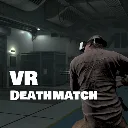
VR Deathmatch
Released
VR or non-VR deathmatch with cross-play. Fight on any deathmatch map and be the player with the highest score.
VrWorldInput.cs
Component that visualizes VR world input. On each update it gets the hovered UI panel from WorldInput, computes a 3D hit point from a world-space ray against the panel or its root, then draws a cyan line and a sphere at the hit point.
using Sandbox;

public sealed class VrWorldInput : Component
{
	[RequireComponent] private WorldInput WorldInput { get; set; }

	private const float HitSphereRadius = 0.5f;

	protected override void OnUpdate()
	{
		var hovered = WorldInput.Hovered;
		if ( !hovered.IsValid() )
			return;

		var origin = WorldPosition;
		var ray = new Ray( origin, WorldRotation.Forward );

		if ( !TryGetHitPoint( hovered, ray, out var hitPoint ) )
			return;

		Gizmo.Draw.Color = Color.Cyan;
		Gizmo.Draw.Line( origin, hitPoint );
		Gizmo.Draw.SolidSphere( hitPoint, HitSphereRadius );
	}

	/// <summary>
	/// Nested hovered panels have no 3D transform; hit-test the root, then fall back to the panel plane.
	/// </summary>
	private static bool TryGetHitPoint( Sandbox.UI.Panel panel, Ray ray, out Vector3 hitPoint )
	{
		hitPoint = default;

		var root = panel.FindRootPanel();
		if ( root.IsValid() && root.RayToLocalPosition( ray, out _, out var distance ) && distance > 0f )
		{
			hitPoint = ray.Position + ray.Forward * distance;
			return true;
		}

		var go = panel.GameObject;
		if ( !go.IsValid() )
			return false;

		// LookAtCamera panels face the viewer; use a plane through the panel toward the ray origin.
		var planePos = go.WorldPosition;
		var planeNormal = (ray.Position - planePos).Normal;
		var denom = Vector3.Dot( ray.Forward, planeNormal );
		if ( denom.AlmostEqual( 0f ) )
			return false;

		var t = Vector3.Dot( planePos - ray.Position, planeNormal ) / denom;
		if ( t < 0f )
			return false;

		hitPoint = ray.Position + ray.Forward * t;
		return true;
	}
}